My Child Has Anger Issues: Is This ADHD, or Something Else?
If your child has anger issues, it is natural to wonder whether this is ADHD or something else. The honest answer is that anger is a signal, not a diagnosis. ADHD can certainly fuel anger, because it makes emotions feel bigger and harder to control, but plenty of children are angry for other reasons: anxiety, sensory overwhelm, tiredness, a big change, or simply a developing brain still learning to manage strong feelings. Anger on its own does not confirm ADHD. What matters is the wider pattern: how often the anger happens, what tends to trigger it, how quickly your child recovers, and whether you also see impulsivity, restlessness, or difficulty focusing across different settings. This guide will help you make sense of your child's anger issues, understand when ADHD might be part of the picture and when something else could be, and take calm, practical next steps toward the right support.
You Are Not the Only Parent Asking This
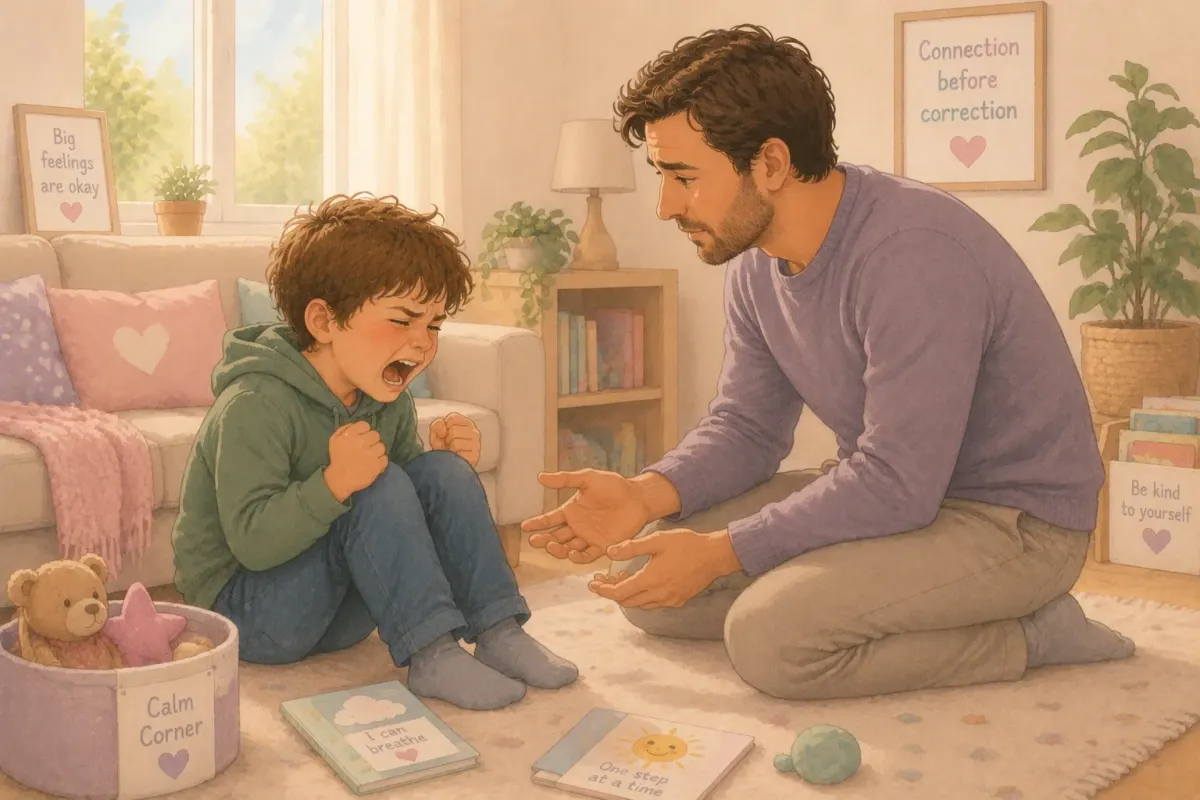
When your child rages, slams doors, or lashes out, it is easy to feel frightened, exhausted, and alone. Many parents quietly worry that the anger means something is wrong, or that they have done something wrong. Neither is usually true. Anger is one of the most common ways children show us they are struggling, and wondering what is behind it makes you a thoughtful, caring parent.
Bakshi Sidhu is a certified conscious parenting and life coach, a former primary school teacher of over ten years, and a nursery owner. Questions about anger, and whether it might be ADHD, are some of the most common she hears from parents.
This guide looks at what anger issues really mean, when ADHD might be part of the picture, what else could be driving the anger, and the calm, practical steps that help most.
What Do Anger Issues in a Child Actually Mean?

There is no medical condition called anger issues. It is simply the phrase parents reach for when a child's anger feels bigger, more frequent, or harder to manage than they expected. That might look like sudden explosions, shouting, slamming doors, hitting or throwing, or long meltdowns that are hard to calm.
It helps to remember that anger itself is normal and healthy. The charity Young Minds describes anger as the tip of an iceberg, with feelings like worry, hurt, fear, and overwhelm often hidden beneath the surface. They also remind parents that the part of the brain that helps children manage emotions keeps developing well into the mid-20s. You can read more on the Young Minds anger guide for parents. The useful question is not how do I stop my child feeling angry, but what is the anger trying to say, and does my child have enough support to manage it?
Is My Child's Anger a Sign of ADHD?
ADHD is often thought of as being about attention and hyperactivity, but managing emotions is a big part of it too. Children with ADHD frequently feel emotions more intensely and find them harder to control, which is why anger and a short fuse are so common. The NHS notes that children with ADHD can act on impulse and find it hard to control their reactions, so a feeling can spill over before they have any chance to pause.
How ADHD can fuel anger
With ADHD, the brain's brakes work differently. A feeling can go from zero to overwhelming in seconds, before a child has had any chance to think. The anger is often impulsive rather than deliberate, and it can fade as quickly as it arrived, leaving the child confused or upset by their own reaction. Our guide to aggressive behaviour in children with ADHD explores this in more depth.
Signs the anger might be linked to ADHD

Anger is more likely to be part of an ADHD picture when it sits alongside other patterns you notice across different places, not just at home. These can include:
Acting on impulse and struggling to wait or take turns.
Being restless, fidgety, or always on the go.
Finding it hard to focus, follow instructions, or finish tasks.
Big, fast emotional reactions that pass quickly.
Similar feedback from school as well as home.
One angry phase does not mean ADHD. It is the combination and consistency, across time and settings, that matter.
If It Is Not ADHD, What Else Could Be Behind the Anger?
Anger is a common final pathway for all sorts of feelings a child cannot yet express. In fact, the NHS points out that being impulsive and full of energy does not by itself mean a child has ADHD, and can instead be a sign of being tired, anxious, or stressed. If the ADHD picture does not quite fit, here are some of the other things worth considering.
Anxiety and worry
Anxious children often look angry rather than frightened. A child who is overwhelmed by worry may snap, refuse, or explode, because anger can feel more powerful than fear. If the anger clusters around specific situations like school, tests, or being separated from you, anxiety is well worth exploring.
Sensory overwhelm, sometimes linked to autism
For some children, anger is the result of a nervous system in overload. Noise, bright lights, certain textures, crowds, or unexpected changes can all tip a child into meltdown. This can be part of a sensory profile, and sometimes it is linked to autism. Our guide to the differences between ADHD and autism can help you tell them apart.
An unmet need or a difficult experience
Sometimes anger is the surface of something deeper: a change at home, a loss, a friendship problem, bullying, or an experience the child has not been able to put into words. In these cases the anger usually appeared or grew around a particular event, rather than always being there.
A developing brain doing its best
It is also worth remembering that learning to manage strong feelings is a skill that takes years to develop. Tiredness, hunger, and being overwhelmed can turn almost any child into a whirlwind. For a closer look at why small things spark big reactions, see our guide on meltdowns over small things.
ADHD Anger vs Other Causes: How Can I Tell the Difference?

You cannot diagnose the cause of anger from behaviour alone, and you do not need to. But noticing when and how the anger shows up can help you get curious and know what to raise with a professional. The table below is a starting point for reflection, not a diagnosis.
If several rows feel familiar, that is completely normal. Children are complex, and more than one thing can be true at once. The goal is to notice patterns, not to label your child.
What Should I Do About My Child's Anger Issues?
You do not need to fix everything in one go. The aim is to help your child feel safe and understood, and to gather the information that helps you and any professionals understand what is going on.
Stay calm and keep everyone safe
In the heat of the moment, your calm is the most powerful tool you have. Keep your voice low, keep everyone safe, and wait for the storm to pass before you try to talk or teach. If anger regularly tips into hitting, throwing, or hurting, focus first on safety, and remove or protect anything that could cause harm until your child settles.
Look for the pattern and the triggers
Keep a simple note of when the anger happens, what came just before, and how long it lasts.
Notice the setting: home, school, transitions, tiredness, or hunger.
Watch what helps your child recover, and gently do more of it.
Get the right support
If the anger is frequent, intense, or affecting daily life, you do not have to figure it out alone. Your GP and your child's teacher are good first ports of call. If you are wondering specifically about ADHD, our guide on how to get an ADHD assessment for your child in the UK walks through the process. A parenting coach can also help you understand the triggers and respond in a way that calms things at home.
Anger Issues Are a Starting Point, Not a Label
When your child has anger issues, it is easy to fear the worst or to search for a single explanation. The truth is usually gentler and more hopeful: anger is a signal that your child needs support to manage big feelings, and there are many possible reasons why. It might be ADHD, it might be something else, and often it becomes clearer with time and the right help.
You do not need all the answers today. Stay calm, stay curious, look for the patterns, and reach out when you need to. With understanding and support, children learn to handle their anger, and family life gets calmer. If you would value a warm, judgment-free conversation about what is going on for your child, you are welcome to reach out.
Related Posts
Understanding Aggressive Behaviour in Kids with ADHD
Why Does My Child Have Meltdowns Over Small Things?
ADHD and Autism: Understanding the Differences
How to Get an ADHD Assessment for Your Child in the UK (2026 Guide)


