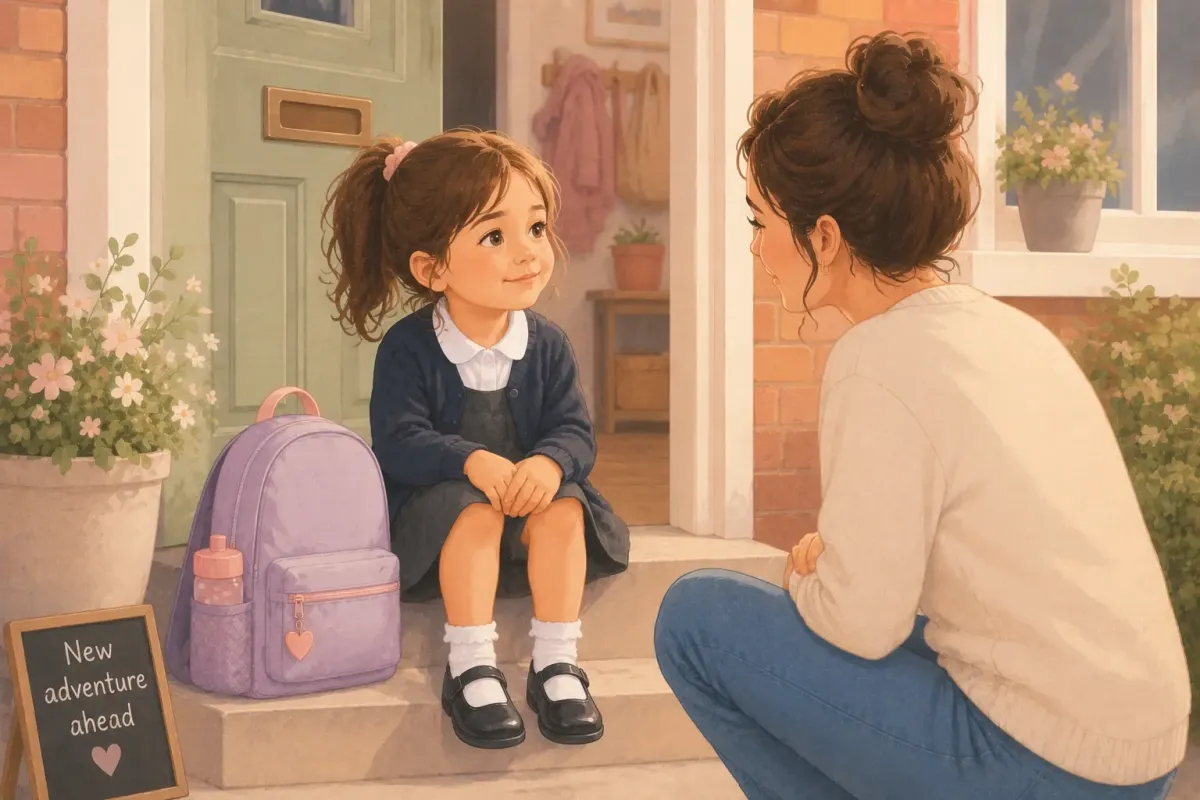
My Child Is Starting Reception in September: How Do I Actually Prepare Them?
If your child is starting Reception in September, the most important thing you can do right now is help them feel emotionally safe, not academically prepared. Children who start school feeling secure, familiar with simple routines, and able to manage a few basic needs independently tend to settle far better than those who have been drilled on letters and numbers. In the UK, the Reception year is part of the Early Years Foundation Stage, which focuses on play-based learning and social development, not formal schoolwork. Your job over the summer is not to turn your four or five year old into a mini student. It is to help them feel confident, calm, and curious. This article explains exactly what to focus on, what to let go of, and how a conscious parenting approach can make September a genuinely exciting milestone rather than a source of dread.
Introduction: The Reception Year Starts Long Before September
For most UK families, the letter confirming a Reception place arrives in April. Then comes a peculiar stretch of months where school feels both very close and very far away. You find yourself watching your child and wondering: are they ready? Will they cope? What if they cry at the gates?
Those questions are completely normal. They come from love. But they can also send parents spiralling into a prep frenzy that adds more anxiety to an already emotionally charged transition.
Bakshi Sidhu is a certified conscious parenting coach, former primary school teacher, and nursery owner with more than fifteen years of experience supporting children through their earliest school years. Her view is clear: the children who thrive in Reception are not the ones who know the alphabet. They are the ones who feel safe, seen, and capable.This guide will walk you through exactly what matters, when, and how to approach the summer in a way that genuinely helps your child rather than overwhelming them or yourself.
What Does Reception Actually Involve? Understanding the EYFS
Before you can prepare your child, it helps to understand what the Reception year actually looks like. In England, Reception is part of the Early Years Foundation Stage (EYFS), the statutory framework governing learning and development for children from birth to age five.
Reception is not Year 1. It is a transition year, deliberately designed to bridge the gap between the play-based world of nursery and the more structured environment of Key Stage 1. A good Reception class will spend a significant proportion of the day in child-led play, both indoors and out.
The seven areas of learning in the EYFS are:
- Communication and language
- Physical development
- Personal, social, and emotional development
- Literacy
- Mathematics
- Understanding the world
- Expressive arts and design
Of these, personal, social, and emotional development sits at the heart of everything. A child who cannot manage their feelings, wait their turn, or ask for help will find Reception far harder regardless of how many letters they can recognise.
What Age Are Children When They Start Reception in the UK?
In England, the school year runs from 1 September to 31 August. Children start Reception in the September after they turn four. This means that on the first day of term, the youngest children in the cohort may have only just turned four, while the oldest will be almost five. That age gap matters enormously at this stage of development.
If your child has a summer birthday, particularly July or August, it is worth knowing that research consistently shows summer-born children can face additional challenges in the early school years simply because of their relative age. This is not a reason to panic. It is a reason to be gentle with expectations and to prioritise emotional readiness above all else.
Parents of summer-born children also have the right to defer entry. If you are considering this, speak to your child's prospective school directly. More information on admission arrangements is available on GOV.UK.
How Do I Know If My Child Is Ready for Reception?
The signs that matter most are emotional, not academic
Parents frequently ask whether their child knows enough. The honest answer is that no child needs to know anything specific before starting Reception. Schools expect to teach children to read, write, and count from the very beginning. What is much harder to teach in a classroom of thirty children is emotional regulation.
The signs of genuine readiness for Reception include:
- Being able to separate from you without prolonged distress
- Managing basic self-care such as using the toilet independently and dressing themselves
- Being able to communicate a need, even simply
- Having some experience of being in a group setting
- Showing curiosity and interest in the world around them
None of these require formal teaching. They develop through play, routine, connection, and gentle encouragement at home.
What if my child struggles to separate from me?

Separation anxiety is one of the most common worries parents raise in the weeks before school starts. If your child finds it hard to leave you, that is not a sign that something is wrong. It is a sign that they are securely attached to you, which is actually a good foundation for school. The key is not to eliminate their need for you but to build their confidence that they can manage in your absence and that you will always come back.
If separation is a significant concern, the article on managing parent-child separation on this site offers practical strategies for both of you: https://littleoneslifecoach.com/post/managing-parent-child-separation-how-to-support-your-child-and-yourself
What Should I Actually Do Over the Summer to Prepare My Child for Reception?
Focus on independence, not academics

The summer before Reception is not the time to begin reading schemes or phonics drills. It is the time to give your child plenty of low-pressure, enjoyable experiences that build the skills they will genuinely need.
Here is what genuinely helps:
- Practise getting dressed and undressed independently, including buttons and zips, which matter at PE time
- Encourage toilet use and basic personal hygiene without your help
- Read together every single day, not to teach reading but to build love of stories and language
- Play board games and turn-taking activities to build the social skills of waiting and listening
- Spend time outdoors in a range of environments to support physical development and sensory confidence
- Let your child experience mild frustration without rushing to fix it, which builds resilience
- Talk about feelings openly and name emotions, which prepares them for the social dynamics of a classroom
Visit the school before September if you can

Most primary schools in England hold a welcome session for new Reception children, usually in June or July. These visits are valuable. They allow your child to see the environment, meet their teacher, and build a mental map of what school looks like before the emotional intensity of the first real day.
If your child is anxious about the visit, do not force enthusiasm. Let them feel nervous and acknowledge it. Something as simple as saying 'it is okay to feel a bit wobbly about new things' does more good than telling them it will be brilliant.
Build a simple morning routine now
September will go more smoothly if your child is already used to getting up at a similar time, getting dressed, eating breakfast, and leaving the house. Beginning to establish the rhythm two or three weeks before the start of term makes the first week far less overwhelming.
How to Talk to Your Child About Starting School
The conversations you have over the summer shape how your child feels about school before they have ever set foot in a classroom. Children pick up on parental anxiety with remarkable precision. If you are anxious, they will be too, even if you say all the right words.
Here are some principles for those conversations:
- Lead with curiosity rather than reassurance. Instead of 'you will love it,' try 'I wonder what your classroom will look like'
- Validate anxiety without amplifying it. 'It is normal to feel a bit nervous about new things' is more helpful than 'there is nothing to worry about'
- Talk about school as a place where interesting things happen, not as a place where you have to go
- If your child has specific worries, take them seriously. 'What if no one wants to play with me?' deserves a real, warm answer
- Share your own childhood school memories, including the nervous ones, to normalise the experience
What About Children Who Have Not Been to Nursery?
Not every child starting Reception in September will have had any formal nursery experience. Some will have been at home with a parent, grandparent, or childminder. This is not a disadvantage if the transition is handled thoughtfully.
Children who have not been in group settings will benefit most from:
- Short, enjoyable playdates with other children before September to practise sharing and turn-taking
- Visits to libraries, soft play, or toddler groups where they are around other children in a low-pressure environment
- Conversations about what a classroom is, who a teacher is, and what a school day involves
Reception teachers are experienced at welcoming children from all kinds of backgrounds. The first weeks of term are specifically designed to settle every child at their own pace.
Should I Be Teaching My Child to Read or Write Before Reception?
This is probably the question Bakshi is asked most often in the weeks before a child starts school. The short answer is no, not unless your child is genuinely interested and asking for it.
Attempting to teach a child who is not developmentally ready to hold a pencil, form letters, or decode words can create negative associations with literacy before they have even begun. It can also lead to children developing incorrect letter formation habits that teachers then have to undo.
What is genuinely helpful in terms of early literacy preparation:
- Read to your child every day and let them choose the books
- Point out print in the environment: signs, cereal boxes, their own name on their bag
- Play with sounds in words: rhyming games and I Spy are perfect
- Let your child hold a crayon, chalk, or paintbrush freely without pressure to form specific letters
If your child is showing interest in letters and wanting to write their name, follow their lead. If not, trust that Reception will meet them exactly where they are.
SEND, Additional Needs, and Starting Reception
If your child has identified additional needs, a diagnosis, or is currently being assessed, starting Reception brings its own layer of complexity. The earlier you begin communicating with the school, the better placed they will be to support your child from day one.
Key steps if your child has additional needs:
- Contact the school's SENCO before the end of the summer term if at all possible
- Share any relevant reports, assessments, or diagnosis letters
- Ask what adjustments they routinely make during the settling-in period
- Find out how the school communicates with parents about how a child has settled
If your child has an Education, Health and Care (EHC) plan, the local authority is responsible for ensuring it is in place before they start. If you are in the process of getting an assessment, do not wait for a formal outcome before talking to the school.
What to Expect in the First Few Weeks of Reception
Even the most well-prepared child may find the first few weeks of school harder than expected. This is completely normal. School is tiring. The social demands are enormous. The environment is new and full of stimulation.
Common things parents notice in the first few weeks:
- Extreme tiredness and a need for much earlier bedtimes
- Emotional meltdowns after school - often called the after-school restraint collapse
- Clinginess at drop-off, even in children who seemed fine during transition visits
- Increased hunger, sometimes because children are too overwhelmed to eat much at lunch
- Regression in behaviours that seemed well established, such as toileting or sleep
All of these are signs that your child is working very hard and needs extra gentleness and connection at home. The worst thing you can do is add pressure. The best thing you can do is offer a snack, a cuddle, and as much calm as you can create in your home environment after school.
If you find yourself wondering why your child falls apart at home while apparently being fine at school, this is explored in depth in the article on why children overreact to small things: https://littleoneslifecoach.com/post/why-child-overreacts-small-things
Conclusion: Your Child Is More Ready Than You Think
Starting Reception is a big deal. It is one of the first genuine milestones of childhood, and it is completely natural to feel a mixture of excitement, pride, and worry in the months leading up to it.
But here is what years of experience in early years education and conscious parenting coaching has taught Bakshi: children take their emotional cue from the adults around them. When you approach September with calm, curiosity, and confidence, your child will too. Not because they have no worries, but because they trust you, and your steadiness tells them that they are safe.
Focus on the small things this summer. Read together. Play together. Let them be messy and free and four years old. Help them learn to put on their own shoes. Tell them you are proud of them for exactly who they are, not for what they already know.
That is the best preparation there is.
Related Articles You Might Find Helpful
- How to Prepare Your Child for Secondary School (Without the Panic) - https://littleoneslifecoach.com/post/prepare-child-secondary-school-transition
- My Child Won't Stop Crying - Is It Anxiety or Something Else? - https://littleoneslifecoach.com/post/child-wont-stop-crying-anxiety
- Why Does My Child Overreact to Small Things? - https://littleoneslifecoach.com/post/why-child-overreacts-small-things


