My Child Is Bored All the Time: What Do I Do?
If your child is bored all the time, especially in the school holidays, it is one of the most common summer complaints, and it does not mean you are failing to entertain them enough. Boredom is a normal part of childhood, and a little of it is actually good for your child. It gives their brain the space to imagine, plan, and problem-solve, and it is often where creativity and independence quietly grow. The instinct to fix boredom immediately, with an activity, a screen, or constant entertainment, is understandable, but it can accidentally teach a child that someone else is responsible for keeping them occupied. What helps most is staying calm when you hear the words I am bored, offering a starting point rather than a ready-made solution, and building in some real unstructured time each day so your child gets practice finding their own way through it. This guide explains why children get bored, when it is genuinely useful, and simple, practical ways to respond that build their confidence rather than your workload.
When "I'm Bored" Becomes the Soundtrack of the Holidays

It usually starts within the first few days. The toys are out, the garden is there, and yet somehow you hear it on repeat: I'm bored. Bored of what, exactly? Everything, apparently. It can feel like a personal challenge, as if you are supposed to have an endless supply of entertainment ready to go.
Bakshi Sidhu is a certified conscious parenting and life coach, a former primary school teacher of over ten years, and a nursery owner. She reassures parents that boredom is one of the most misunderstood complaints of childhood, and that you are not required to solve it every single time.
This guide explains why children get bored, why that is not automatically a problem, and calm, practical ways to respond that help your child, rather than adding to your to-do list.
Why Is My Child Bored All the Time?
Boredom usually has less to do with a lack of things to do, and more to do with what is happening underneath. A few common reasons come up again and again.
Too much structure, not too little
Ironically, children who are used to a packed schedule of adult-led activities can struggle the most with unstructured time, because they have had little practice filling it themselves. If the holidays feel completely unstructured after a busy term, some of this adjustment is genuinely a skill your child is still learning. Our guide on why children's behaviour gets worse in the school holidays looks at the wider loss of routine that sits alongside this.
A habit of being entertained

If screens, activities, or a parent's attention have consistently filled every gap, a child can lose the muscle memory for starting their own play. This is not a character flaw. It is simply a skill that develops with practice, like any other.
Boredom as a stand-in for another feeling
Sometimes I'm bored actually means I want your attention, I feel a bit flat, or I do not know what to do with this feeling. Boredom can be the easiest word a child reaches for when something else is going on underneath. Our guide on how to identify your child's needs looks at reading behaviour, including boredom, as communication.
Too much choice, or the wrong kind of stimulation
A room full of toys with a single purpose, or endless options with no starting point, can actually feel overwhelming rather than exciting. Fewer, more open-ended options often spark more engagement than a mountain of specific, single-use toys.
Is Boredom Actually Bad for My Child?

Not necessarily, and it may even be valuable. Play is central to how children develop, and the NSPCC highlights that in-person play has a positive impact on children's wellbeing, helping them feel happier, more confident, and better able to cope with stress. Unstructured time, including the boring bits, is often where that kind of play happens. Left with nothing planned, children practise deciding what to do, tolerating a little discomfort, and using their imagination, all genuinely useful life skills.
That does not mean every moment of boredom is productive, or that you should never help. It simply means boredom itself is not something to panic about or rush to eliminate.
How Should I Respond When My Child Says They're Bored?
You do not need a bag of tricks ready at all times. A calmer, simpler approach usually works better for everyone.
Pause before you fix it
Try not to leap straight to an activity suggestion. A simple, warm response, such as sounds like you're not sure what to do with yourself right now, gives your child a moment to sit with the feeling rather than immediately outsourcing it to you.
Offer a starting point, not a solution
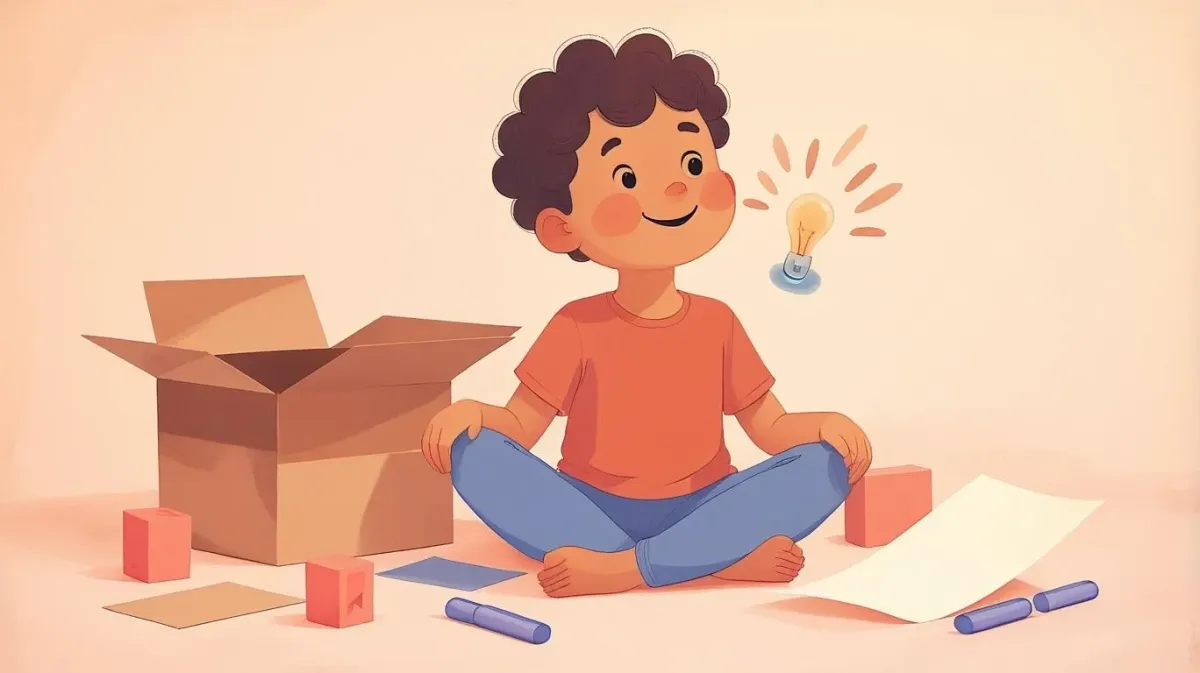
Instead of arranging the whole activity, offer an ingredient: a cardboard box, some paper and pens, a bucket of water outside. Open-ended materials invite a child to lead, rather than passively receive entertainment.
Get outside when you can

Movement and fresh air are often the fastest route out of boredom, and they support your child's wider health too. The NHS recommends children and young people get at least 60 minutes of physical activity a day, and active outdoor play is a natural, enjoyable way to work towards that during the holidays.
Protect some genuinely unstructured time
If every hour of the day is planned, boredom never gets the chance to do its quiet work. Leaving real gaps in the day, even just an hour, gives your child regular practice at entertaining themselves, which gets easier the more they do it.
Use screens as one option, not the answer
Screens can absolutely have a place in a boring afternoon, but relying on them every time means your child never builds the skill of finding their own way through boredom. Our guide on how to balance screen time has practical ways to keep this in check without a daily battle.
Boredom Responses at a Glance
If you are not sure how to respond in the moment, this quick reference pairs the common instinct with a more helpful alternative.
When Should I Worry About My Child's Boredom?
Everyday boredom, especially during the school holidays, is normal and usually nothing to worry about. It is worth paying closer attention if boredom seems to mask something else, such as low mood, withdrawal, or a loss of interest in things your child usually enjoys, or if they cannot engage with anything even with encouragement and support. If that sounds familiar, your GP or your child's teacher is a good first step.
A Little Boredom Is Not a Parenting Failure
If your child is bored all the time this summer, take a breath. It is one of the most normal complaints of childhood, and it does not mean you need to fill every waking hour. A little boredom, met with a calm response and some open-ended time, can quietly build the very skills, creativity, independence, and resilience, that you want your child to have.
You do not need to solve every boring moment, and you do not have to figure out the balance alone. If you would value a warm, judgment-free conversation about your child's holidays, you are welcome to reach out.
Related Posts
My Child's Behaviour Gets Worse in the School Holidays: Why, and What Helps
How to Balance Screen Time: Digital Habits for Kids
How to Identify Your Child's Needs
30 Fun and Engaging Activities for ADHD Children


