How to Talk to Your Child About Big Emotions (UK Guide)
Talking to your child about big emotions without shutting them down starts with connection before correction. When a child is flooded with anger, fear, or sadness, the thinking part of their brain goes offline, so lectures and logic rarely land. What helps most is to stay calm, get down to their level, and let them know the feeling is welcome: I can see this is really big for you. Naming the emotion out loud, sometimes called name it to tame it, helps a child feel understood and slowly settle. Try to avoid dismissing phrases like you are fine or stop being silly, which quietly teach children to hide feelings rather than share them. Once your child is calm, you can gently talk about what happened and what might help next time. Done consistently, these small moments build trust and emotional resilience. This guide gives you simple, practical ways to talk to your child about big emotions with warmth and confidence.
Why Big Emotions Feel So Big (For Both of You)

When your child melts down over a snapped biscuit or a sock that feels wrong, it can be baffling and, on a hard day, maddening. But to your child, the feeling really is that big. Their brain is still developing, and the parts that help them pause, reason, and calm down are years away from being fully built. In the heat of a big emotion, they are not giving you a hard time, they are having a hard time.
Bakshi Sidhu is a certified conscious parenting and life coach, a former primary school teacher of over ten years, and a nursery owner. Helping parents find the words that calm rather than escalate these moments is at the heart of her work.
This guide explains what it really means to talk about big emotions without shutting them down, why children clam up when we get it wrong, and a simple, calm approach you can use tonight.
What Does It Mean to Talk About Big Emotions Without Shutting Them Down?
Shutting a child down means, usually without meaning to, sending the message that a feeling is not welcome. It happens through dismissing (you are fine), minimising (it is not a big deal), rushing (come on, we do not have time for this), or punishing the feeling itself (stop crying or else).
None of this makes you a bad parent. Most of us grew up hearing these exact phrases. But over time, they teach children to hide their feelings rather than share them. The alternative is not letting your child do whatever they want. It is welcoming the emotion while still holding the boundary. Our post on things that quietly shut children down looks at this in more detail.
Why Do Children Shut Down When We Talk About Feelings?
Children go quiet or explode further for understandable reasons. When a feeling is big, the emotional part of the brain takes over and the logical part goes offline, so reasoning simply cannot land yet. On top of that, children shut down when they feel judged, rushed, or when we leap straight to fixing or correcting.
If your child often seems to overreact to small things, that is usually a sign their cup was already full, not that they are being difficult. Our guide on why children have meltdowns over small things unpacks what is going on underneath.
How to Talk to Your Child About Big Emotions: A Simple, Calm Approach

You do not need the perfect script. You need a calm presence and a few reliable steps. Here is an approach you can lean on when the storm hits.
Regulate yourself first
Your calm is contagious, and so is your stress. Before you say anything, take a slow breath and steady yourself, even if that means pausing for a few seconds. If you find yourself losing your cool often, you are not alone, and our guide on how to stop yelling at your child has practical strategies that help.
Connect before you correct
Come down to your child's level, soften your voice, and let them feel you are on their side: I am here. This is hard. Connection tells the nervous system it is safe, which is what has to happen before any learning or problem-solving can.
Name the emotion to help tame it
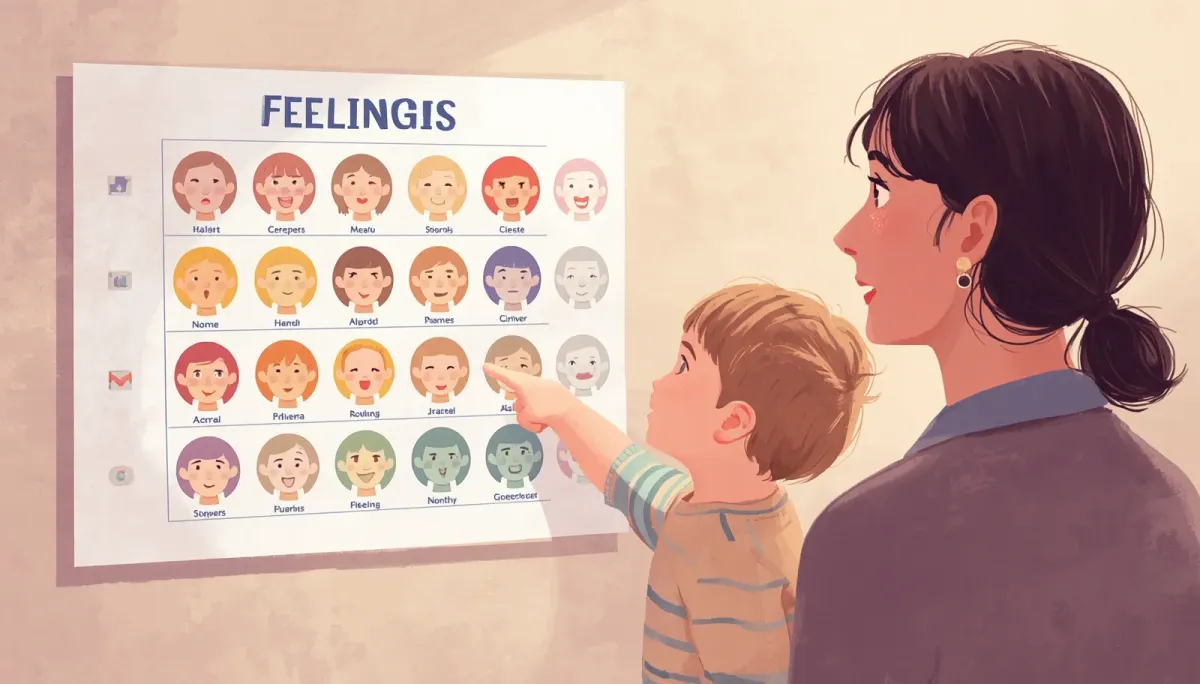
Gently put words to what you see, without being certain: You seem really frustrated, or I wonder if that felt unfair. Naming a feeling helps a child feel understood and, over time, builds the vocabulary they need to manage emotions themselves. It is fine to get it wrong, your child will correct you, and that is part of the conversation.
Listen without rushing to fix
Once your child is talking, resist the urge to jump in with solutions. Often they just need to feel heard. The NHS suggests gently commenting on what you notice and, if your child is not ready to talk, letting the subject go and trying again another time. Little and often works far better than one big conversation.
Problem-solve together once calm
When the wave has passed and your child is settled, you can revisit what happened and think together about what might help next time. This is the moment for gentle boundaries and ideas, not in the middle of the storm. Asking what could we try next time invites your child in rather than lecturing them.
What to Say and What to Avoid
Small changes in wording can be the difference between a child who opens up and one who clams shut. The NHS encourages parents to be there to listen and to take what children say seriously, helping them work through difficult feelings. The table below gives you swaps you can use straight away.
Helping Big Emotions Get Smaller Over Time
Every calm conversation is a deposit in your child's emotional bank. You will not get it right every time, and you do not need to. Repair matters more than perfection, so if you snap, simply come back later and reconnect.
Over weeks and months, naming feelings, staying calm, and modelling your own emotions all help your child build genuine emotional skills. If you would like more everyday techniques, our guide on how to foster emotional intelligence in young children is full of gentle, practical ideas.
Every Big Feeling Is a Chance to Connect
Learning to talk to your child about big emotions without shutting them down is not about finding perfect words. It is about being a calm, safe place for your child to bring their feelings, again and again. When children feel heard, the big emotions slowly get smaller, and they learn they can handle hard feelings with someone beside them.
Be patient with your child, and with yourself. These skills take time for both of you. If you would value a warm, judgment-free conversation about what is happening in your home, you are welcome to reach out.
Related Posts
Why Does My Child Have Meltdowns Over Small Things?
5 Things You Should Never Say to Your Child
How to Stop Yelling at Your Child: 3 Strategies That Actually Work
How to Foster Emotional Intelligence in Young Children


