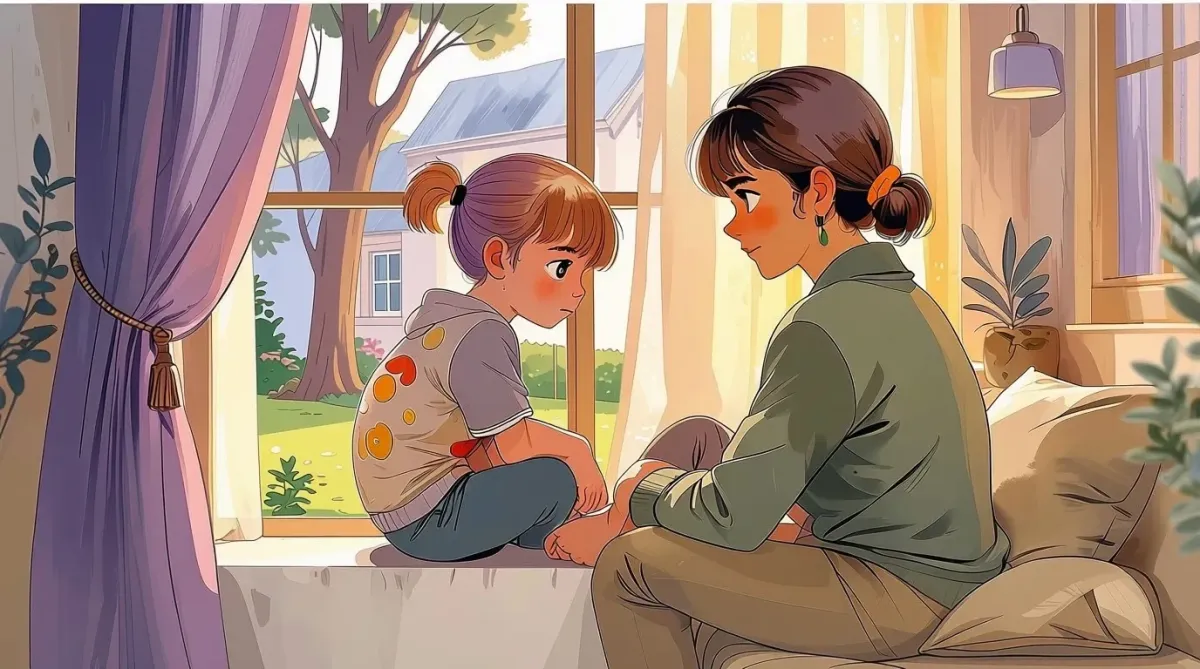
My Child Worries About Everything: Is This Anxiety and What Do I Do?
If your child worries about everything, from what might happen at school tomorrow to whether you are going to die, from getting something wrong to whether the family is safe, it can feel exhausting and frightening to watch. Some worry is completely normal in childhood. But when worry becomes constant, wide-ranging, and hard for your child to control, it may be a sign of generalised anxiety rather than typical childhood nervousness. The NHS describes generalised anxiety disorder as one of the most common anxiety conditions in children, and it can significantly affect daily life when left without support. The good news is that childhood anxiety is very treatable, and the things that help most are not complicated. This article explains the difference between normal worry and anxiety that needs support, what signs to look for at different ages, what you can do at home right now, and when to seek professional help.
Introduction: When Worry Becomes More Than Worry
Every child worries. That is not just normal - it is healthy. Worry is the brain's way of anticipating difficulty and trying to prepare for it. A child who never worried at all would be missing an important protective mechanism.
But some children seem to worry constantly, about everything, and the worry does not settle when the feared thing either happens or does not happen. It simply moves on to the next thing. These children can find daily life genuinely exhausting. They may appear clingy, avoidant, or difficult to reassure. They may have trouble sleeping, stomach aches on school mornings, or a persistent need for certainty that cannot be met.
Bakshi Sidhu is a CPMC certified conscious parenting coach, former primary school teacher of over ten years, nursery owner of five years, and mother of two. She works regularly with families whose children are caught in cycles of anxiety, and her approach is always the same: understand the worry first, before trying to fix it. Because anxiety in children is almost always telling you something. The question is what.
What Is the Difference Between Normal Worry and Anxiety?
The line between normal childhood worry and anxiety that needs support is not always obvious. Most children worry about some things some of the time. The questions that help distinguish typical worry from something more significant are:
- Is the worry proportionate to the actual situation, or does it feel wildly out of scale?
- Does it settle once the feared event has passed, or does it move immediately to the next worry?
- Is it affecting your child's ability to do things they need or want to do?
- Is it present across multiple areas of life rather than centred on one specific fear?
- Is it getting worse over time, or staying roughly the same?
- Is your child asking for reassurance repeatedly without being able to hold on to the reassurance for long?
When worry is pervasive, persistent across many areas, difficult for the child to control, and interfering with daily life, it has moved beyond typical childhood nervousness. The NHS guidance on anxiety in children makes clear that when anxiety affects a child's ability to function at home, at school, or socially, it is appropriate to seek support. That guidance is available at nhs.uk/mental-health/children-and-young-adults/advice-for-parents/anxiety-in-children.
What Is Generalised Anxiety Disorder in Children?
Generalised anxiety disorder, known as GAD, is a clinical condition characterised by excessive and persistent worry about a wide range of everyday events and activities. Unlike specific phobias, which centre on one particular fear such as dogs or needles, GAD spreads across multiple areas simultaneously.
A child with GAD might worry about:
- Whether something bad is going to happen to a parent or sibling
- Making mistakes at school or getting something wrong
- What other children think of them
- Natural disasters, news events, or world events they have heard about
- Their own health or the health of people they love
- Whether they will be able to cope with something coming up
- Being late, getting lost, or things not going to plan
Crucially, children with GAD often know that their worry is excessive. They may say things like 'I know it probably won't happen but I can't stop thinking about it.' This insight does not make the anxiety easier to manage. It often adds a layer of shame or frustration on top of the original worry.
GAD is one of the most common anxiety conditions in childhood, and it frequently goes unidentified because anxious children are often well-behaved, high-achieving, and easy to miss in a classroom setting. They hold it together publicly and fall apart at home, which can lead parents and teachers to underestimate the level of distress the child is experiencing.
What Does Childhood Anxiety Look Like? Signs by Age

In young children aged 3 to 7
Young children do not have the language to describe anxiety as anxiety. Instead it tends to show up as:
- Clinginess and difficulty separating from parents even in familiar settings
- Frequent stomach aches or headaches with no identified physical cause
- Nightmares, difficulty falling asleep, or frequent night waking
- Asking the same worry-questions repeatedly and not being settled by the answers
- Meltdowns that seem disproportionate, particularly around transitions or changes to routine
- Regression in previously established skills such as toileting or sleeping independently
At this age, anxiety often clusters around separation, the dark, and safety. It is also strongly influenced by the parent's own anxiety level, which children absorb even when adults say nothing aloud.
In children aged 7 to 11
Older primary-age children begin to worry more about social situations, academic performance, and the wider world. Signs at this age include:
- Specific voiced worries that keep returning despite reassurance
- Avoidance of situations that trigger worry, such as not wanting to go to parties or school events
- Seeking excessive reassurance from parents, sometimes repeatedly asking the same question
- Physical complaints that cluster around anxiety-provoking situations
- Difficulty making decisions, even small ones, for fear of getting it wrong
- Perfectionism and distress when things do not go as planned
Children at this age are also beginning to absorb news and world events with more comprehension, which can add a layer of global worry that younger children are shielded from. Limiting news exposure while validating the feelings it triggers is an important balance.
In adolescents aged 11 and above
Anxiety in older children and teenagers can look quite different from anxiety in younger children. It may present as:
- Irritability and anger rather than visible fear or worry
- Withdrawal from social situations or from the family
- School refusal or persistent underperformance despite clear ability
- Physical complaints including headaches, stomach problems, and fatigue
- Insomnia and difficulty settling at night
- Increased use of screens or other avoidance behaviours as a way of managing anxiety
Adolescent anxiety is also more likely to be masked by a performance of confidence or indifference, making it harder to spot from the outside. An anxious teenager who appears cool and unbothered at school may be falling apart at home.
Why Do Some Children Worry More Than Others?
Anxiety in children does not arise from a single cause. It is almost always the result of a combination of factors working together:
Temperament and nervous system sensitivity
Some children are born with a more sensitive nervous system. They process sensory information more intensely, feel emotions more acutely, and register threat more readily than their less sensitive peers. This is not a flaw. Sensitivity and anxiety are not the same thing, though sensitivity can make a child more vulnerable to developing anxiety when combined with other factors. Sensitive children, with the right support, often become deeply empathetic, creative, and perceptive adults.
Family patterns and parental anxiety
Anxiety has a significant genetic component, but it is also learned and modelled. Children of anxious parents are more likely to develop anxiety themselves, both because of genetic factors and because they absorb the anxious interpretations of the world that their parents express, sometimes explicitly, often without realising it.
This is not a reason for guilt. It is a reason to look at your own relationship with worry alongside your child's. The article on fear and parenting on this site explores how parental anxiety shapes children's responses: https://littleoneslifecoach.com/post/fear-and-parenting-how-it-drives-our-anxiety-anger-and-other-reactions-to-our-children
Experiences and environment
Significant changes, losses, or stressful experiences, including house moves, parental separation, bereavement, academic pressure, social difficulties, and bullying, can trigger or escalate anxiety in children who might otherwise have managed well. The connection between a stressful experience and an anxiety presentation is not always obvious. A child whose parents separated two years ago may only now be showing significant anxiety, as the full emotional weight of that change settles in.
Unmet needs and unidentified difficulties
Anxiety in children is frequently a sign of an unmet need. A child who is struggling academically and has an unidentified learning difficulty may be anxious about school. A child with undiagnosed ADHD may be anxious because their environment makes constant demands their nervous system cannot consistently meet. A child who is being bullied or is struggling socially may develop generalised anxiety that spreads beyond the specific cause.
When a child's anxiety is new, sudden, or intensifying, it is always worth asking what might have changed in their environment or experience, and whether there is an unidentified difficulty that deserves closer attention.
What Actually Helps: Supporting an Anxious Child at Home
Validate the worry without amplifying it
The most important thing you can do when your child expresses worry is to acknowledge it without dismissing it or catastrophising with it. Both extremes, 'you are being silly' and 'oh no, you are right to be worried about that', are unhelpful. The aim is warm, matter-of-fact acknowledgement:
'I can hear that feels really scary for you. Worry can feel very big. What do you think the most likely thing is that will happen?'
This validates the feeling, normalises the experience, and gently invites the child to look at the evidence alongside you rather than from inside the anxiety alone.
Reduce reassurance-seeking cycles
It feels counterintuitive, but reducing the frequency of reassurance actually helps anxious children more than increasing it. Each reassurance brings temporary relief but teaches the child that they cannot tolerate the uncertainty themselves. They need you to resolve it.
The alternative is to empathise with the worry and then resist answering the specific question. 'I know you are worried about whether you will remember everything for tomorrow. That worry makes sense. I wonder what you could do to help yourself feel more prepared?' This shifts the locus of coping from you to the child, gradually and gently.
Build a worry routine
For children who worry persistently, a contained worry time can be surprisingly effective. This is a short, daily period, perhaps ten minutes after school, where worries are welcomed, written down, or talked through. Outside of this time, when a worry arises, the child is gently reminded that worry time is coming and that worry can wait.
This approach helps children learn that worry has a place, that it is manageable, and that it does not need to flood the entire day. It also gives the parent a structured, contained opportunity to hear the worry rather than being ambushed by it at unpredictable moments.
Maintain routine and predictability
Predictable routines reduce background anxiety significantly by removing the cognitive load of not knowing what comes next. Consistent mealtimes, bedtimes, and daily rhythms give the anxious child's nervous system regular reassurance that the world is manageable and safe. When routines are disrupted, prepare anxious children in advance wherever possible.
Help your child name what they feel
Children who can name their emotions are significantly better equipped to manage them. Building an emotional vocabulary is a slow, cumulative process, built through everyday conversation, books, and the parent modelling their own emotional language. When a child can say 'I feel anxious about this' rather than experiencing an unnamed, overwhelming sensation in their body, they have already taken a step toward managing it.
The article on how to talk to your child about big emotions covers this in depth: https://littleoneslifecoach.com/post/talk-to-child-about-big-emotions
Watch your own regulation
You are your child's primary co-regulator. When you are calm, their nervous system has something to borrow from. When you are anxious, they absorb that too. This is not about performing calmness you do not feel. It is about doing your own work alongside your child's.
If your child's anxiety is significantly affecting your own wellbeing, that is important information. You cannot pour from an empty cup, and the most effective thing you can do for an anxious child is to have enough regulation yourself to be genuinely present with them.
Is My Child's Worry Connected to ADHD or Another Condition?

Anxiety and ADHD co-occur in a significant proportion of children, and the overlap can make both harder to identify. ADHD can cause anxiety because the child is repeatedly struggling, failing, or being corrected in environments that demand sustained attention and impulse control. Anxiety can cause inattention because a worried brain is a preoccupied brain. And some children genuinely have both.
Similarly, anxiety frequently accompanies autism, sensory processing differences, and learning difficulties such as dyslexia. In all of these cases, the anxiety is often secondary to an unmet need in the environment, which means addressing the underlying difficulty reduces the anxiety significantly.
If your child's anxiety feels connected to difficulties with attention, sensory sensitivity, or learning, the article on why children overreact to small things explores the neuroscience behind this connection: https://littleoneslifecoach.com/post/why-child-overreacts-small-things
When Should I Seek Professional Support for My Child's Anxiety?

Seek professional support if your child's anxiety is:
- Significantly affecting their sleep, eating, friendships, or school attendance for more than a few weeks
- Causing frequent physical symptoms such as stomach aches or headaches with no identified medical cause
- Leading to school refusal or avoidance of activities they previously enjoyed
- Getting worse rather than staying stable or improving
- Associated with panic attacks, which are episodes of intense physical fear that can include racing heart, difficulty breathing, and a feeling of losing control
Your first point of contact should be your GP, who can assess whether a referral to CAMHS is appropriate. CAMHS, the Child and Adolescent Mental Health Service, offers a range of support including Cognitive Behavioural Therapy, which has a strong evidence base for childhood anxiety.
Young Minds offers excellent guidance for parents on supporting an anxious child, and their free parent helpline is available on 0808 802 5544, Monday to Friday. Their full guide on childhood anxiety is at youngminds.org.uk/parent/parents-a-z-mental-health-guide/anxiety.
A parenting coach who specialises in emotional regulation and childhood anxiety can also offer support alongside or before a GP referral. Working on the relational and communication patterns at home often makes a significant difference even while waiting for clinical support.
How Does Conscious Parenting Help an Anxious Child?
Conscious parenting is particularly well-suited to supporting anxious children because it starts with the relationship. A child who feels genuinely seen, understood, and emotionally safe with their primary caregiver has a fundamentally different experience of anxiety than one who feels alone in it.
The conscious parenting approach that Bakshi works with is built on emotional attunement, honest communication, and the kind of secure, non-judgmental connection that tells a child: your feelings are welcome here, you do not have to manage this alone, and I trust you to get through this.
That experience of being accompanied in anxiety, rather than dismissed, rescued, or left to manage alone, is the foundation from which an anxious child begins to develop genuine confidence in their own capacity to cope.
For parents wondering whether this approach has an evidence base, the article on whether conscious parenting actually works addresses this directly: https://littleoneslifecoach.com/post/child-wont-stop-crying-anxiety
Conclusion: Your Child's Worry Is a Signal, Not a Sentence
When your child worries about everything, it can feel relentless. The questions, the reassurance-seeking, the physical symptoms, the avoidance, the bedtime dread - it is exhausting to live with as a parent, and even more exhausting to live with as the child.
But anxiety in children, however overwhelming it feels right now, is not a life sentence. It is a signal. It is your child's nervous system communicating that it is struggling to feel safe, and that it needs support to find a more manageable relationship with uncertainty.
The most powerful thing you can do right now is not to eliminate the worry. It is to stop your child from feeling alone in it. When a child knows that their worry is understood, that it will not overwhelm you, and that they have at least one person in their life who genuinely believes they can get through hard things, the anxiety begins, slowly and gradually, to lose some of its grip.
That is where recovery from childhood anxiety begins. In a relationship. Probably yours.
Related Articles You Might Find Helpful
- My Child Won't Stop Crying - Is It Anxiety or Something Else? - https://littleoneslifecoach.com/post/child-wont-stop-crying-anxiety
- My Child Is Anxious About Going Back to School - What Do I Do? - https://littleoneslifecoach.com/post/child-anxious-back-to-school-uk
- How to Talk to Your Child About Big Emotions Without Shutting Them Down - https://littleoneslifecoach.com/post/talk-to-child-about-big-emotions
- Why Does My Child Overreact to Small Things? - https://littleoneslifecoach.com/post/why-child-overreacts-small-things


